Green Spaces
Aravalli Biodiversity Park
A 400-acre rewilded former mining site next to Cyber Hub, now the city's cleanest walking and jogging space.
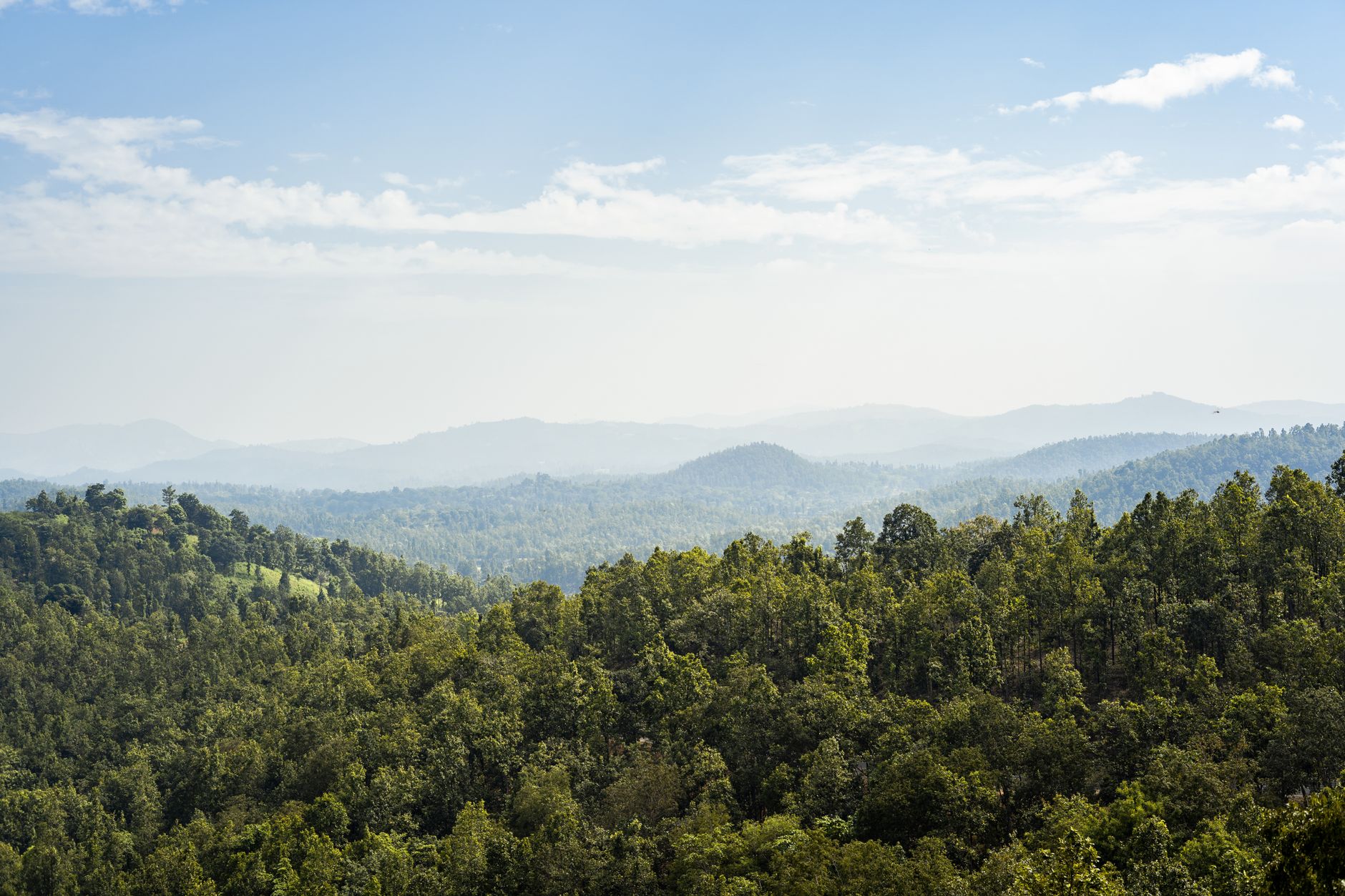
The Aravalli Biodiversity Park is one of urban India's most successful ecological restorations. Twenty years ago this 400-acre plot behind Cyber City was a scarred limestone quarry dumped with construction debris. Since 2011 the municipal corporation, in partnership with Delhi's ecology teams, has planted over one million native trees and stripped out invasive kikar. The site is now a genuinely functioning dry-scrub ecosystem, with nilgai, peafowl, jackals and over 190 bird species inside city limits. In 2022 it became the first site in India recognised as an OECM, an Other Effective Area-based Conservation Measure under the IUCN framework, which acknowledges land conserved outside the formal reserve system. The planting was curated for the citizens' group iamgurgaon, whose volunteers still run the nursery. Expect thorny dry forest of dhau, khair, kareel and palash rather than lawns and flower beds: there is not one ornamental flower bed here, and that is entirely the point.
There are two entrances — the DLF Phase 3 gate closest to the metro and the Guru Dronacharya gate on the far side. Six colour-coded loop trails run between two and seven kilometres each; the yellow trail passes the old quarry pit, now a seasonal pond, and the green trail climbs to a low ridge with a view back to Cyber City's towers. There are benches, drinking water points and a small nursery selling native saplings. No food, no shops. Junction posts carry the colour codes but not distances, so photograph the map board at the gate before you start walking. Check dams and percolation pits built during the restoration hold water into December, and that is where peafowl and nilgai come to drink at first light. Do the full outer circuit only if you have a clear two hours; otherwise take the yellow loop and turn back at the pond.
Come at dawn — the park opens at 5:30am and the temperature and light are both best. It is popular with corporate Gurugram's running clubs and cycling groups on Sunday mornings, so weekdays are more peaceful. Wear walking shoes; the paths are packed earth rather than tarmac. Winter (November-February) is the peak season for both weather and birding. Combine with breakfast at Cyber Hub, a five-minute drive south. Entry is genuinely free and there is no ticket booth to bypass. Volunteer-led bird and tree walks run on some weekend mornings and cost nothing — ask at the nursery about the next one rather than paying an operator for access nobody needs to buy. Facilities are thin, so use a bathroom at the metro or your hotel before you set off, and skip the middle of the day entirely between April and June.
Getting here is the easiest part of the trip. Guru Dronacharya on the Delhi Metro Yellow Line is the closest station: fares run roughly ₹20-₹30 from HUDA City Centre and around ₹50 from Rajiv Chowk in central Delhi, a ride of about 45 minutes. From the station take the footbridge and walk ten minutes along the NH-48 service road towards DLF Phase 3 for the north gate. The Rapid Metro loop (Sikanderpur, Phase 2, Cyber City, Moulsari Avenue, Phase 3) drops you a similar distance away and is useful if you are already inside the Cyber City cluster. An auto from HUDA City Centre is ₹100-₹150 after bargaining, a cab ₹200-₹300 in morning traffic. Drivers park on the service lane by the gate, which is free but fills by 7am on Sundays — arrive at opening or take the metro.
There is nothing to pay. No entry fee, no camera fee, no parking ticket, no resident-versus-visitor tier, and no booth where anyone can pretend otherwise; if a listing quotes you a price for this park, it is wrong. The only money that changes hands inside is at the nursery, where native saplings sell for small sums that go back into the planting programme. Budget instead for what surrounds the visit: ₹40-₹60 for a metro return, ₹200-₹300 for a cab each way, ₹20 for chai and ₹60-₹80 for a paratha in Nathupur village behind DLF Phase 3, or ₹500-₹1,000 for two at a Cyber Hub breakfast spot afterwards. Bring your own water bottle and refill at the points on the trail — that single habit is the whole cost of a morning here.
The hour matters more than the day. From 5:30am to about 7:15am the park is quiet, cool and full of birdsong, and this is when nilgai and the occasional golden jackal cross the trails; from 7:30am to 9:30am the running and cycling clubs take over the wider loops; midday is dead and, from April to June, genuinely dangerous at 42-45C with almost no shade on the open sections. A second good window opens around 4:30pm and runs to closing at 7pm. By month: November to February is the peak, with winter migrants like bluethroat, black redstart and Siberian stonechat, though December-January fog can hold until 8am and Gurugram's November air quality is poor even here. July to September is greenest and the pond fills, at the cost of mud and mosquitoes. Avoid Sunday mornings if you want silence.
This suits walkers, runners, birders and anyone who wants an hour outdoors without paying for it. Families do well with children over about six who can manage three kilometres of uneven ground; prams and wheelchairs are limited to the wider compacted stretch just inside each gate, and the ridge and quarry-pond trails are not viable on wheels. Teenagers expecting rides, food courts or anything to photograph beyond trees are the wrong audience — send them to Cyber Hub instead. A rainy afternoon is the worst possible slot: the earth paths turn slick, there is no shelter and no cafe to retreat to. With a one-hour gap before a train or a meeting, enter at the DLF Phase 3 gate, walk the short yellow loop to the pond and back, and you will still make it.
Fold this into a Cyber City half-day. DLF Cyber Hub is about 2 km south, five minutes by car or a 20-minute walk along the service road, and its breakfast is the natural pairing with a dawn walk. Ambience Mall sits roughly 3 km north towards the Delhi border for air conditioning and a cinema. Leisure Valley Park in Sector 29 and the 32nd Avenue food strip in Sector 15 are each about 15 minutes by cab. Serious birders should pair the park with Sultanpur National Park, 15 km west and 35-45 minutes by road, where the winter waterbird list is far longer — do Aravalli at sunrise and Sultanpur by mid-morning. If you are staying in the Cyber City cluster, at Trident Gurgaon or Ahuja Residency Cyber City I, the north gate is a ₹100 auto ride.
The honest caveats. This is a restored scrub forest, not a national park: the nilgai, jackals, civets and mongoose are all genuinely resident, but a two-hour walk may show you nothing larger than a peafowl, and nobody guarantees otherwise. NH-48 runs along one boundary, so traffic noise never fully disappears on the northern trails, and the towers of Cyber City are visible from most high points — the wilderness is real, the isolation is not. The quarry pond is seasonal and lies dry and dusty from March to June, which is exactly when photographs online show it full. Signage marks colours but not distances, so download an offline map. And the persistent expectation of a cafe, a toilet block at every gate or a boating lake belongs to a different kind of park. Bring water, come at dawn, and it delivers.
Hours & entry
Free entry all day
Mon-Sun 5:30-19:00
What to see
{'what': 'The quarry pond viewpoint on the yellow trail', 'where': 'Roughly 1 km in from the DLF Phase 3 gate'}
{'what': 'Ridge lookout on the green trail', 'where': 'Highest point of the park, 2.5 km loop'}
{'what': 'Native plant nursery', 'where': 'Near the Guru Dronacharya entrance'}
Tips from the ground
Enter at the DLF Phase 3 gate for easier metro access.
Sunrise walks are the coolest option May through September.
Bring water — there are refill points but no cafe on site.
Good to know
Questions, answered
Is there an entry fee?
No, the park is free to enter every day. There is no ticket counter, no camera charge, no separate rate for visitors and no parking fee on the service lane outside either gate. Nothing inside sells anything except the nursery, where native saplings go for small sums that fund the planting work. Any website quoting a figure for admission here is simply wrong. Your only real costs are transport — around ₹20-₹30 on the metro from HUDA City Centre, or ₹200-₹300 in a cab.
Any restricted hours?
Closed between 7pm and 5:30am for wildlife protection. Guards clear the trails from about 6:40pm, so start your last loop no later than 6pm in winter, when it is dark by 6:15pm anyway. The 5:30am opening is real and worth using: the first ninety minutes are the coolest, quietest and by far the best for spotting nilgai and peafowl at the water points. From April to June, being inside before 7am is the difference between a pleasant walk and a punishing one.
How much time do I need?
Ninety minutes to two hours for a proper loop. The short yellow trail out to the quarry pond and back takes about 40 minutes at a normal walking pace; the green trail up to the ridge and down adds another 45 minutes or so; the full outer circuit of roughly seven kilometres runs to two hours with stops. Birders with binoculars routinely spend three hours and still leave species unticked. With a one-hour gap, do the yellow loop from the DLF Phase 3 gate and skip the ridge.
Is the park ever closed?
Never closed to the public, though some trails may be shut in monsoon after heavy rain. There is no weekly rest day and no seasonal closure — it opens at 5:30am seven days a week including public holidays. After a July or August downpour, low sections near the check dams flood and the packed-earth paths turn to slick clay, so stick to the wider main trails or come back a day later. Occasional planting or maintenance work can fence off short stretches, always signposted at the gate.
Do I need to book?
No booking, no ticket — just walk in through either gate. Nothing here operates on reservation, and no tour company holds privileged access, so a paid guided walk buys you only company. The volunteer bird and tree walks organised by the citizens' group behind the restoration run on some weekend mornings from the gates and are free; ask at the nursery or check their notices rather than paying an operator. Large groups, school visits and anyone wanting to plant a sapling should contact the nursery in advance.
Which metro is closest?
Guru Dronacharya on the Yellow Line, a ten-minute walk to the north gate. Come out towards the DLF Phase 3 side, cross by the footbridge and follow the NH-48 service road. Fares are roughly ₹20-₹30 from HUDA City Centre and about ₹50 from Rajiv Chowk in Delhi, with the first trains reaching Gurugram around 6am — early enough for a sunrise walk but not for the 5:30am opening. The Rapid Metro loop stations at Phase 3 and Moulsari Avenue are a similar distance if you are already in Cyber City.
Doing good is the business: every booking through Stay Gurugram funds one verified tonne of carbon removal — same room, same price, no markup.
Start your search